
The Science of PRP: Triggering Natural Collagen Regeneration
- Jan 20, 2026
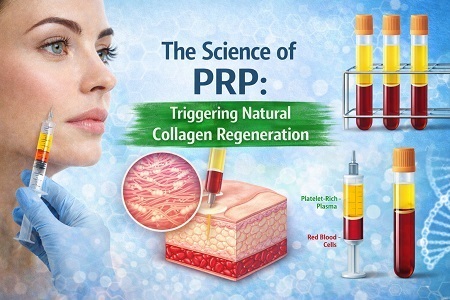
Collagen is the structural backbone of youthful skin, healthy joints, and resilient tissues. Yet, with age and environmental stressors, collagen production declines, leading to visible ageing, tissue weakness, and delayed healing.
Reasons for Collagen Degradation
- Ageing: Fibroblast activity slows, and existing collagen fibres lose their structural integrity.
- UV Exposure: Generates free radicals that damage collagen and elastin fibres.
- Inflammation and Oxidative Stress: Chronic inflammation, pollution, smoking, and poor nutrition actively break down collagen.
- Hormonal Changes: Reduced oestrogen levels, particularly during menopause, significantly impact collagen density.
- Lifestyle Factors: Poor sleep, high sugar intake, and stress further compromise collagen quality.
The result is thinning skin, loss of elasticity, fine lines, slower wound healing, and degeneration in musculoskeletal tissues.
What Is PRP? (Platelet-Rich Plasma)
It uses the patient’s own blood, which is rich in platelets and growth factors. These platelets contain proteins that are essential for tissue repair, angiogenesis, and collagen synthesis.
Drawbacks of Artificial Collagen
Many aesthetic and regenerative treatments rely on artificial or externally introduced substances, such as synthetic fillers or collagen implants, to restore volume or structure. While these can provide immediate results, they do not address the underlying decline in cellular function.
Also Read: Revitalize Your Look: PRP for Hair Restoration and Aesthetic Enhancement
How PRP Triggers Natural Collagen Regeneration
The effectiveness of PRP lies in its complex biological signalling. Once injected or applied to targeted tissue, PRP initiates a cascade of regenerative processes:
- Growth Factor Release: Platelets release key growth factors such as PDGF (platelet-derived growth factor), TGF-β (transforming growth factor-beta), VEGF (vascular endothelial growth factor), and EGF (epidermal growth factor).
- Fibroblast Activation: These growth factors stimulate fibroblasts, the cells responsible for producing collagen, elastin, and extracellular matrix.
- Neovascularisation: PRP promotes the formation of new blood vessels, improving oxygenation and nutrient delivery to tissues.
- Cellular Turnover and Repair: PRP enhances tissue remodelling, accelerates healing, and reduces chronic inflammation.
- Collagen Maturation: Newly formed collagen fibres mature and organise over weeks to months, leading to improved strength, elasticity, and texture.
This process explains why PRP results are progressive rather than instant, and why outcomes continue to improve over time.
Natural Regeneration with Remarkable Results
PRP represents a paradigm shift in collagen restoration. The outcomes are not merely cosmetic; they reflect improved tissue vitality, resilience, and long-term structural integrity. For individuals seeking scientifically sound, minimally invasive, and regenerative solutions, PRP offers truly remarkable results, powered entirely by the body’s own healing intelligence.
FAQs: PRP and Natural Collagen Regeneration
1. What is PRP therapy?
PRP therapy, or platelet-rich plasma therapy, uses a person’s own blood to concentrate platelets rich in growth factors that stimulate healing and collagen production naturally.
2. How does PRP stimulate collagen regeneration?
PRP releases growth factors that activate fibroblasts, promote new blood vessel formation, and trigger the production and maturation of new collagen fibres over time.
3. Why is PRP better than artificial collagen or fillers?
PRP improves the body’s natural regenerative function instead of adding synthetic substances. This leads to gradual, longer-lasting improvements in tissue quality and strength.
4. How long does it take to see PRP results?
PRP results develop gradually. Initial improvements may appear within weeks, while collagen remodelling and tissue strengthening continue for several months.
5. What conditions benefit from PRP collagen regeneration?
PRP is used for skin rejuvenation, fine lines, tissue repair, hair restoration, joint degeneration, and delayed wound healing.
6. Is PRP therapy safe?
Yes. PRP is considered safe because it uses the patient’s own blood, reducing the risk of allergic reactions or rejection when performed by trained professionals.